
If you’ve been scrolling through TikTok lately and seen users declaring “I’m in Group 7,” you’re not alone, and you may be wondering what that actually means.
Here’s a quick breakdown of the trend: what it is, where it came from, and why everyone’s talking about it.
What does “Group 7” mean?
“Group 7” refers to a viral label that users assign to themselves on TikTok. The idea is that if you saw a specific video (number seven in a series) you’re automatically part of “Group 7.”
It doesn’t really come with any official membership, perks or rules; it’s more of an inside joke and a fun way for users to claim they’re part of something exclusive.
In short: if a TikTok shows you “you are in Group 7,” you join by virtue of algorithmic chance – not because you applied or were chosen.
Where did the Group 7 trend originate?
The origin traces back to singer-songwriter Sophia James (also known under the name Sophia Wackerman).
On 17 October 2025 she posted a sequence of seven videos on TikTok, each numbered, as part of what she called “a little science experiment” to test which content would reach the most viewers.
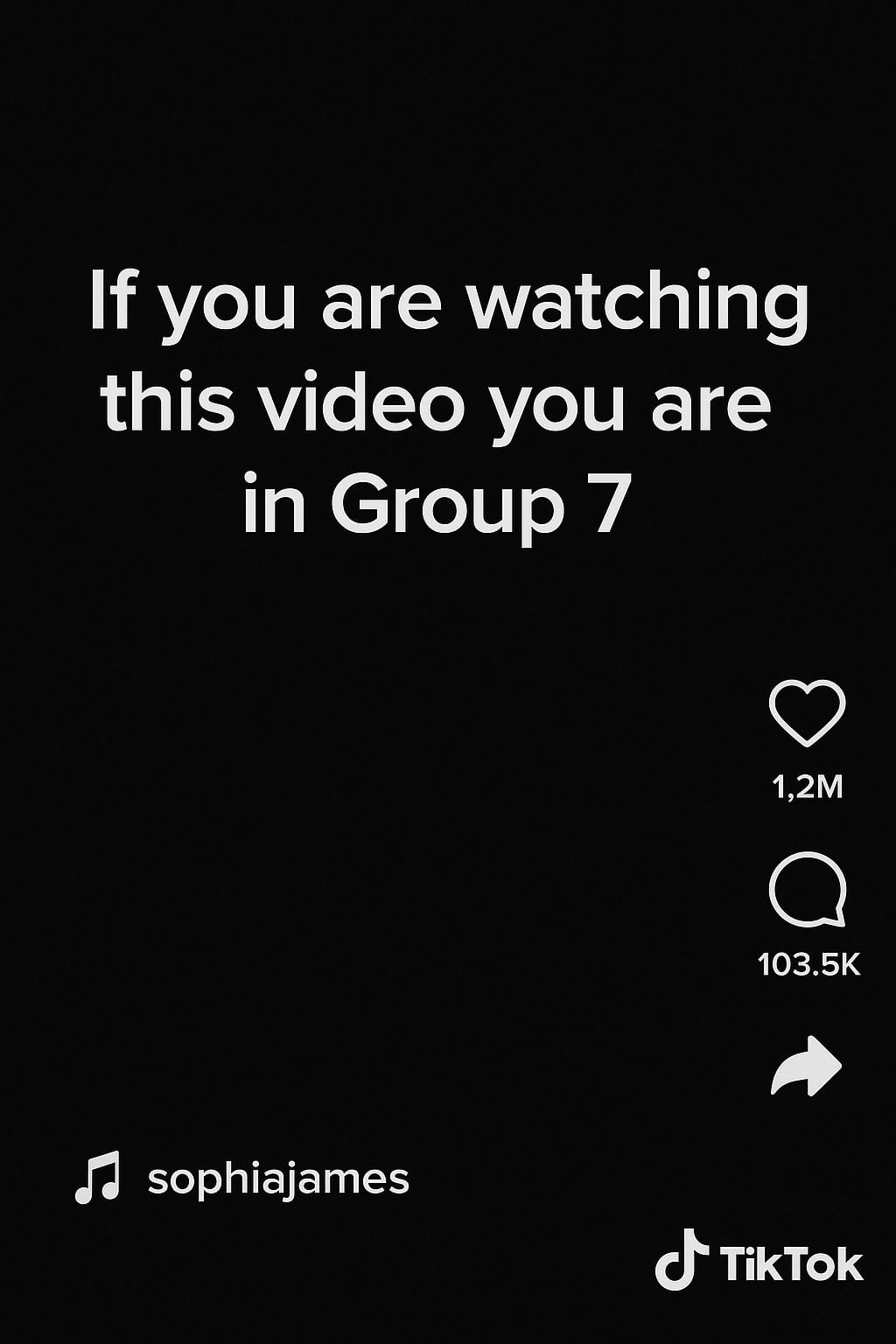
The seventh video in that sequence unexpectedly took off. In the clip she says: “If you are watching this video you are in Group 7. I have posted seven videos tonight and this is the seventh one.”
From that point the label “Group 7” caught on. Social media users began identifying themselves as part of it, and brands and influencers jumped in.
Why is The Group 7 Viral Trend so popular?
There are several reasons why “Group 7” exploded:
- It taps into our love of belonging to something exclusive
- It uses the randomness of the algorithm: you don’t choose – your feed chooses, which makes it feel spontaneous and fun.
- It’s easy to replicate: users simply declare their “group” and share, which helps it spread fast.
- It intersects with celebrity and brand involvement, which amplifies visibility
How do you know if you’re in Group 7 or another group?
There’s only one way: the first video you saw in the series by Sophia James determines your “group.”
If you saw the seventh video first, you’re in Group 7. If you saw an earlier video (Group 1 through Group 6) first, then you’d belong to that number, though those groups didn’t become nearly as popular.
Importantly: you can’t choose to be in Group 7 by re-watching or searching the video—it depends on your feed and when you came across it.
What does being “in Group 7” do?
Functionally, nothing. It’s not a real club, membership scheme or exclusive society. It’s a cultural meme – a collective joke among TikTok users. But for many people, being able to say “I’m in Group 7” is a badge of internet-coolness and gives them a shareable identity.
Some brands have even used the trend in promotions, offering “Group 7” themed deals.
Why it matters (or why you might care)
Even though it’s silly, the “Group 7” trend is a good example of how the TikTok algorithm and viral culture work: a simple experiment becomes a meme, identity, marketing tool and inside joke all in one. It shows how fast digital culture moves and how users respond to belonging and chance.
For brands, creators and marketers it holds lessons: authenticity, spontaneity, and a little mystery can go a long way.
If you’ve seen “Group 7” pop up on your feed: you’re part of the moment. Whether you laugh at it, participate or just watch it unfold, it’s a classic example of modern internet culture.
And if someone asks you “What group are you in?” you’ve got your answer (and now you know the back-story).
1 thought on “‘I’m in Group 7″ – What Does it Mean?”