
If you’ve spent any time watching The Handmaid’s Tale or reading The Testaments, you already know one thing for sure. Gilead is not a vibe.
It’s strict, suffocating, and completely obsessed with control.
So why is it named after something that was literally meant to heal people?
Like everything in the handmaid’s tale and the testaments, there is so much symbolism and deeper meaning to all of it, and with the new spin off the Testaments on Disney+, we’re once again deep in exploring this world – so let’s dig in!

What Even Is the Balm of Gilead?
If you’re wondering where the name Gilead came from, and whether it has any meaning or significance? Of course it does… nothing is by mistake in The Handmaid’s Tale. I’m sure you’ve heard the chilling fact Margaret Attwood mentioned that every single act you see included in the book or in the show, has taken place for real in our world. They are combined in a new way, but none of these atrocities are fictional. That’s a real mind-fk and an eye opener for sure.
So… the name Gilead?
The phrase “balm of Gilead” comes from the Bible. It was a real substance, a kind of rare resin used as medicine in the ancient world. People believed it could heal wounds and soothe pain.
But it’s not just about physical healing. In the Book of Jeremiah, it becomes symbolic. It represents hope. A cure. The idea that even when things are falling apart, there might still be a way to fix them.
So originally, the concept of Gilead is tied to healing, restoration, and relief. That’s the balm of Gilead spiritual meaning.
Basically the opposite of everything we see in Gilead on screen.
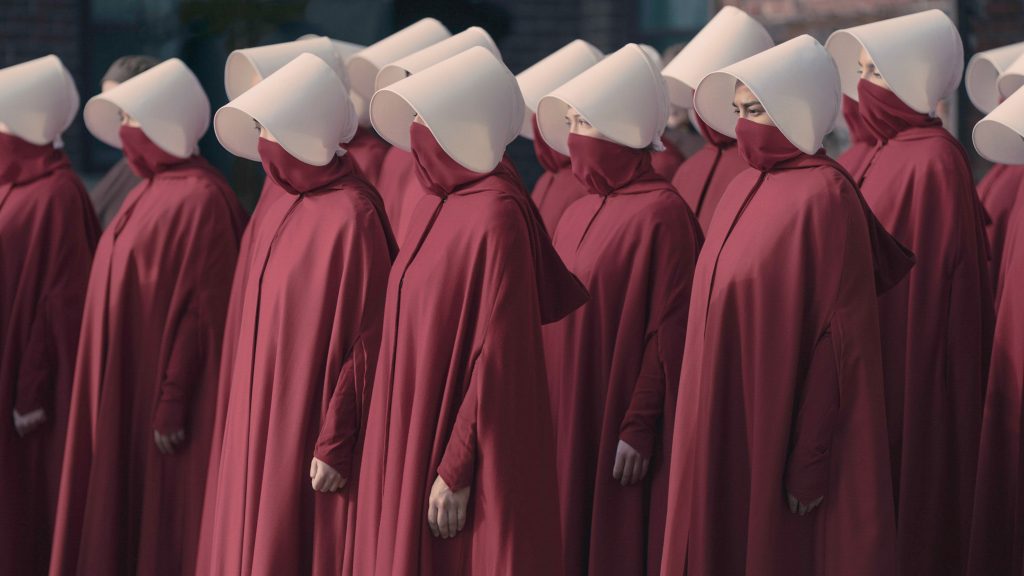
Gilead In The Bible Wasn’t The Villain
The region of Gilead in biblical times had a good reputation. It was fertile, prosperous, and known for producing this healing balm. It wasn’t some dark oppressive regime. It was more like a place people associated with solutions.
The phrase “balm of Gilead” appears in a few places in the Bible, all in the Old Testament. The most well-known references are:
Book of Jeremiah 8:22
“Is there no balm in Gilead? is there no physician there? why then is not the health of the daughter of my people recovered?”
Book of Jeremiah 46:11
“Go up into Gilead, and take balm, O virgin, the daughter of Egypt: in vain shalt thou use many medicines; for thou shalt not be cured.”
Book of Genesis 37:25
“…and, behold, a company of Ishmeelites came from Gilead with their camels bearing spicery and balm and myrrh…”
The most famous and commonly quoted line is Jeremiah 8:22, which is where the symbolic meaning of healing and restoration really comes from.
All of this makes the name choice in The Handmaid’s Tale feel very intentional.
Because that version of Gilead is not healing anything.
So Why Call It Gilead In The Handmaid’s Tale?
Margaret Atwood knew exactly what she was doing.
In The Handmaid’s Tale, Gilead presents itself as the answer to a broken world. Birth rates are collapsing. Society is unstable. People are scared. Gilead steps in and says we can fix this.
We are the cure.
We are the balm.
And that’s the lie.
Because instead of healing anything, Gilead creates a system built on control, fear, and rigid hierarchy. It doesn’t restore society. It reshapes it into something chillingly unrecognizable.
The name is ironic and it’s also a warning.
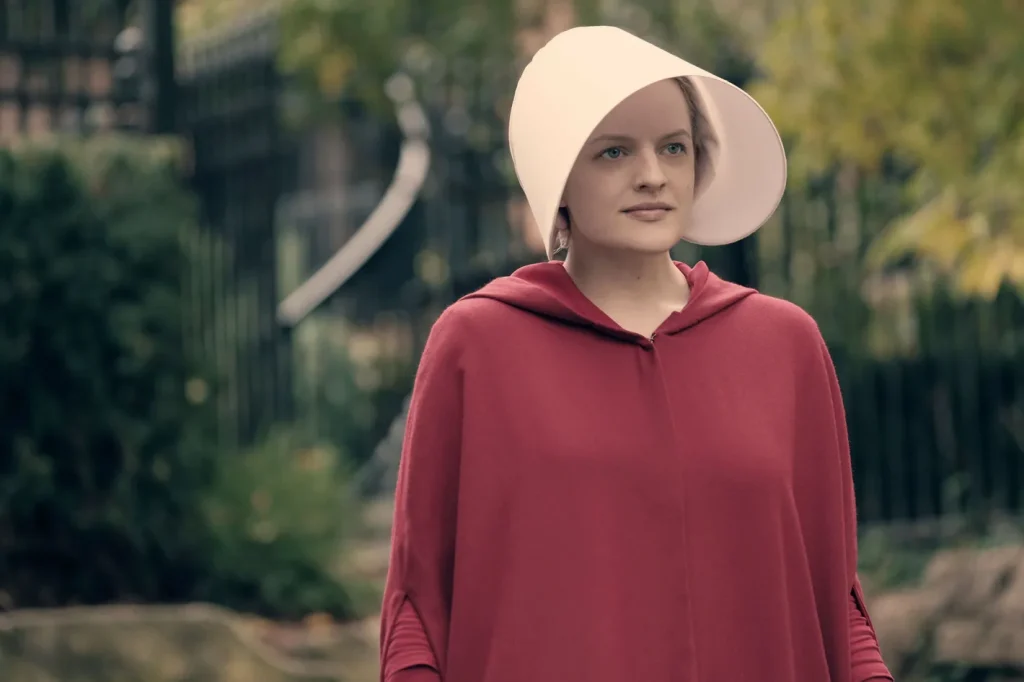
The Dark Irony You’re Supposed To Notice
Here’s where it gets even more uncomfortable.
The original “balm of Gilead” was about asking a question. Is there healing for a broken world?
Gilead in The Handmaid’s Tale answers that question with absolute confidence. Yes. But only if you follow our rules.
And those rules come at a cost.
Women lose autonomy. People lose freedom. Religion gets twisted into a tool for power. Everything is justified as necessary for the greater good.
So the “healing” becomes something forced. Controlled. Conditional.
That’s not healing. That’s some sick compliance dressed up as salvation.
Gilead Was Never As Strong As It Looked
The thing about Gilead is that it never actually worked the way it claims to.
Even early on, you can see the cracks. The rules are strict, but they’re constantly being bent behind the scenes. The system looks controlled on the surface, but underneath it’s full of fear, secrecy, and quiet resistance.
That “perfect solution” image doesn’t hold up for long.
What Gilead calls order is really just pressure. It has to keep reinforcing itself over and over, because the moment people stop believing in it, the whole thing starts to slip.
And that ties right back to the original idea of the balm of Gilead.
The Bible presents it as a question. Is there healing? Is there a cure?
Gilead answers with certainty. Yes. This is the cure.
But the reality tells a different story.
It doesn’t heal. It controls. And the more it tries to force that control, the more obvious it becomes that the “cure” was never real in the first place.
So Why This Name Hits So Hard
Because it flips something familiar.
A word associated with healing becomes a symbol of harm. A place that once meant hope becomes a system built on control.
That contrast is what makes it stick.
It’s not just a dystopian name. It’s a critique of what happens when people believe too strongly in a “perfect solution” and stop questioning it.
The balm of Gilead was supposed to represent healing in a broken world.
Gilead in The Handmaid’s Tale and The Testaments is what happens when that idea gets taken too far and twisted into something absolute.
It’s the difference between helping people and controlling them.
And once you realize that, the name Gilead stops sounding biblical and starts sounding like a warning.

More TV
Need more Tv and movie inspiration? Keep reading
- What to Watch Next Now That Stranger Things is Ending
- What Is the Pixar Theory and Does It Actually Make Sense
- The 15 Most Confusing Film Endings, Explained
- 22 Best AI Movies About Artificial Intelligence
- 9 Best Wilderness Survival Movies That Will Leave You Breathless
- 13 Must-Watch Shows for Fans of Wednesday on Netflix
- Best Korean Horror Movies on Netflix
1 thought on “What Is the Balm of Gilead And Why It Makes The Handmaid’s Tale Even Darker”